
Researchers confirm the impact of profilometry-guided scleral lenses on visual acuity and aberrations in patients with keratoconus, PMD, and post-LASIK ectasia.
Barone, Vincenzo; Petrini, Daniele; Surico, Pier Luigi; Nunziata, Sebastiano; Scarani, Claudia; Offi, Francesco; Villani, Valentina; Coassin, Marco; Di Zazzo, Antonio
A groundbreaking new study, “Profilometry-Guided Scleral Lenses Improve Visual Acuity and Reduce Ocular Aberrations in Irregular Corneas” (Barone et al., 2025), has confirmed what many specialty lens fitters have experienced in practice: scleral lenses designed with profilometry data can significantly enhance vision quality for patients with irregular corneas.
Why this matters
Irregular corneal conditions such as keratoconus (KC), pellucid marginal degeneration (PMD), and post-LASIK ectasia often make clear vision impossible with glasses or standard contact lenses. Scleral lenses (SLs) are already a gold-standard option, creating a smooth optical surface that improves visual acuity. But, until now, little published evidence has shown the added benefit of using profilometry-guided designs, where the lens is customized based on a detailed map of the cornea and sclera.
Key Findings
The research analyzed 23 eyes from 23 patients with corneal irregularities who were fitted with profilometry-guided scleral lenses. The results were outstanding:
Visual acuity gains
- High-contrast VA improved from 0.62 logMAR to 0.03 logMAR.
- Low-contrast VA improved significantly at all tested levels.
Reduced higher-order aberrations
-
HO-RMS dropped from 2.70 D to 1.00 D.
-
Coma reduced from 1.31 D to 0.49 D.
-
Trefoil reduced from 1.26 D to 0.34 D.
No adverse events or complications were reported during the follow-up period.
What it means for Clinical Practice
By tailoring the lens to the individual eye’s surface, profilometry-guided scleral lenses deliver both sharper vision and reduced visual distortions. This translates into more reliable visual performance in real-world conditions, improving patients’ overall quality of life.
For practitioners, the study underscores that profilometry should be considered an essential tool in modern scleral lens fitting, helping achieve better outcomes, fewer refits, and higher patient satisfaction.
How Profilometry with the ESP Helps
This study confirms that profilometry-guided scleral lenses are highly effective in improving visual acuity and reducing higher-order aberrations in patients with irregular corneas.
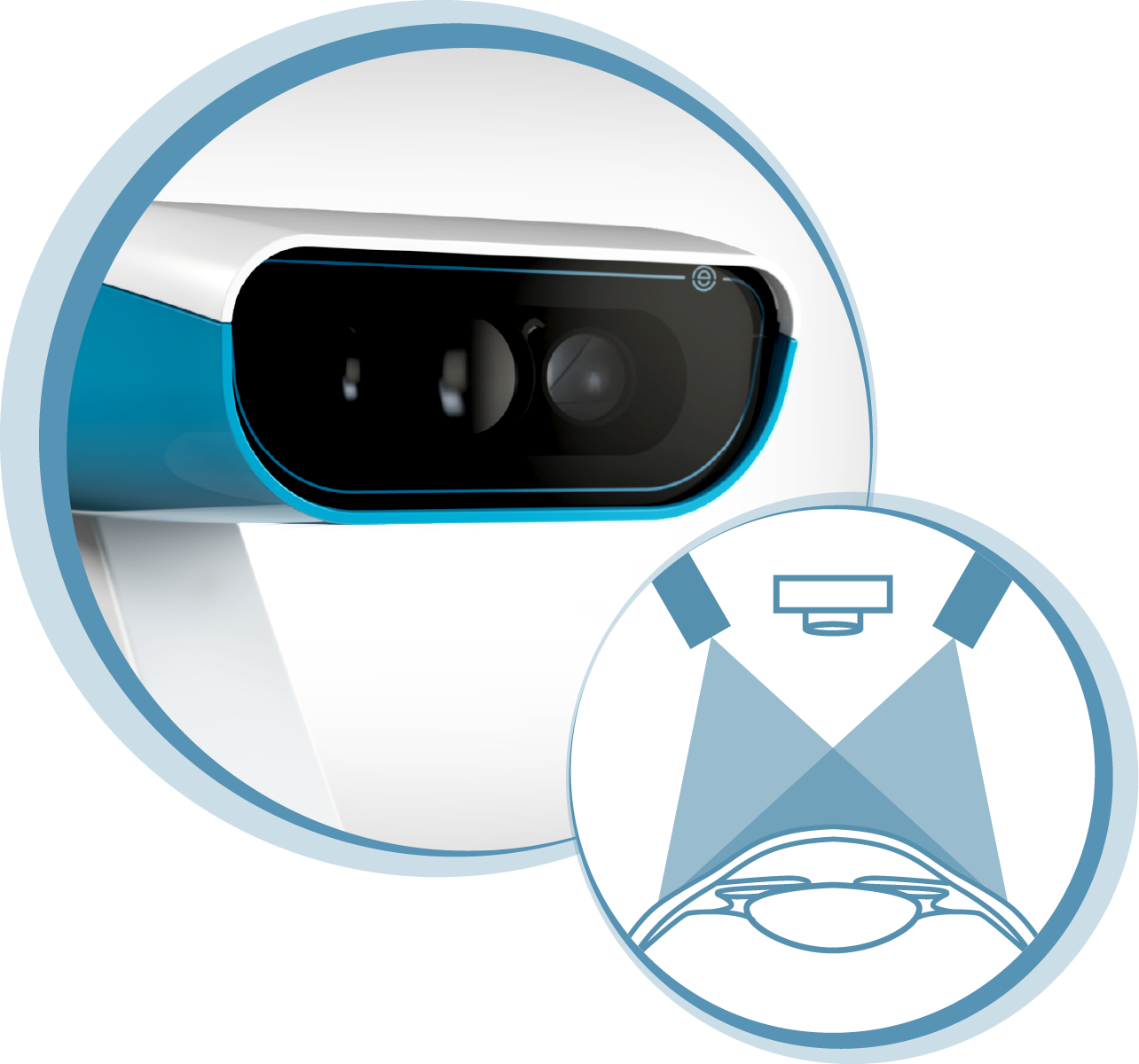
The Eye Surface Profiler (ESP) makes this possible in daily practice by delivering a full limbus-to-limbus map of the eye, showing whether the sclera is spherical, toric, asymmetric, or irregular. With precise elevation data, practitioners can design the optimal landing zone right from the start, reducing chair time and minimizing trial and error.
Source: Barone, et al. Profilometry-Guided Scleral Lenses Improve Visual Acuity and Reduce Ocular Aberrations in Irregular Corneas: A Retrospective Case Series. Eye & Contact Lens: Science & Clinical Practice ():10.1097/ICL.0000000000001199, June 11, 2025. | DOI: 10.1097/ICL.0000000000001199


